


Navigating the Regulatory Pathway for Smarter, Safer, More Efficient and Effective Medical Device Submissions

When it comes to medical device development, innovation gets all the excitement and attention, but the less glamorous regulatory process is a non-negotiable hurdle that can delay even the most advanced technology from reaching the market. That’s why it’s essential to establish a solid regulatory strategy that anticipates and mitigates risks, accelerates approvals, and ultimately aligns with your business goals, right from the start.

Kaleidoscope Innovation’s team of seasoned regulatory experts have developed an end-to-end regulatory assessment designed to map out the path to clearance or approval with efficiency and precision. Here’s an overview of our approach.

01

Background & Purpose: Laying the Foundation

The first step is to develop a comprehensive understanding of your product’s intended use, target markets, and previous regulatory history. It’s also essential to align your goals with regional requirements—whether for the U.S. (FDA), EU (MDR), or other global territories—ensuring that every decision is guided by both compliance and market strategy. Here are some guidelines we use:

  • Define the Intended Use/Indications for Use
  • Identify key territories for regulatory clearance
  • Summarize any prior submissions, rejections, or correspondence to avoid duplication and leverage existing work

02

Product Description: Translating Innovation into Regulatory Language

Next, we break down your device’s design and functionality into a format that regulators understand, capturing the critical elements—from technical schematics to visual documentation—that describe the full scope of your product. This is an area in which Kaleidoscope excels. Our product assessments include:

  • Detailed device description and illustrations
  • Identification of any planned iterations that could impact classification or approval timelines

03

Medical Device Definition: Clarifying Classification Early

Accurate classification is critical, identifying whether your product meets the FDA’s definition of a medical device or qualifies under non-device pathways. These include:

  • General Wellness classifications
  • Non-device Clinical Decision Support (CDS) tools

By making this determination early, we help uncover faster or lower-risk pathways and avoid unnecessary regulatory burden.

04

Product Regulation: Finding the Right Regulatory Fit

Using FDA databases and internal expertise allows us to determine the appropriate regulatory classification and product codes based on the intended use and technology profile. Kaleidoscope’s regulatory specialists:

  • Cross-reference public databases to identify potential regulations
  • Select the most appropriate product codes and submission routes, whether a 510(k), De Novo, or PMA

05

Identifying Predicate & Reference Devices: Building a Case for Equivalence

If pursuing a 510(k), our team will research potential predicate devices to demonstrate substantial equivalence and streamline your path to market.

We also explore:

  • Reference devices that can support safety and performance claims
  • Strategies for leveraging this data to shorten timelines and reduce required testing

06

Regulatory Recommendations: Strategic Pathways to Market

This is not an area you can check boxes, and having an experienced team lead the effort eases the burden and stress for our clients. We craft a regulatory roadmap that aligns with your product and your business. Our process addresses:

  • Early FDA engagement (Q-Sub, Pre-Sub, or Pre-IDE meetings), including communications and strategic negotiations that facilitate the best outcomes
  • Opportunities to apply for Breakthrough Device Designation or Safer Technologies Program (STeP)
  • The most efficient marketing pathway, such as a Special 510(k) or De Novo, based on cost, timing, and risk

07

Testing Requirements: Designing for Approval

Aligning our experience with your product needs, we develop a targeted testing strategy using:

  • Relevant regulatory guidance documents
  • Precedent data from similar cleared devices
  • Listings on ClinicalTrials.gov
  • Industry standards and FDA expectations

Our recommendations consider everything from biocompatibility and electrical safety to usability testing and human factors engineering (HFE). Our team can also go beyond testing to implementation, tapping Kaleidoscope’s in-house Human Factors team and/or wet lab, conducting clinical trials, and more.

08

Marketing Submission Content: Getting Everything in Order

We ensure you're fully prepared for submission with a checklist that covers every requirement. Our regulatory team compiles, reviews, and often authors the following, delivering final approved versions for company submission:

  • All necessary 510(k), De Novo, or PMA documentation
  • Establishment registration and device listing
  • Small business qualification options, when applicable
  • Quality System Regulation (QSR) readiness; we can also build your QMS from scratch in paper or digital format
  • References to the most current FDA guidance documents and ISO standards

With decades of experience working with industry leaders like Baxter and a range of small start-up businesses, Kaleidoscope Innovation has earned a reputation for combining deep regulatory knowledge with world-class product development. Our approach helps new projects get started from the ground up and provides clearance for those that are further along. In all cases, we target long-term success, risk mitigation, and accelerated timelines.


Let’s map your regulatory path with confidence. > Let's start something.


Download this Regulatory Strategy At-a-Glance Guide to see how we simplify FDA submissions and accelerate approvals.

Back to Insights + News

Author

  • Colleen Murphy

    Director of Regulatory Affairs | [email protected]

    With over 25 years of experience in Regulatory Affairs, Colleen brings deep expertise in global medical device compliance, clinical trial strategy, and FDA, Health Canada, and ICH regulations—guiding products from protocol development through submissions, audits, and post-market support.


Human Factors Engineering Process for Medical Devices

In the medical product industry, ensuring the safety, efficacy, and usability of products is paramount. One of the key methods for achieving this goal is through the proper implementation of a robust Human Factors engineering (also known as usability engineering or ergonomics) process. Human Factors engineering (HFE) focuses on optimizing the interaction between people and technology to prevent errors, enhance performance, and improve the overall user experience.

Because of the risks involved, medical device development demands an especially thorough Human Factors process. They often require precise operation under conditions where an error can result in reduced clinical effectiveness, harm, or even death. Whether these products are used by health care providers, caregivers, or even the patients themselves, medical products that are not designed with the capabilities of the end user in mind can increase the chance of errors. To mitigate these risks, regulatory bodies such as the U.S. Food and Drug Administration (FDA) mandate that Human Factors principles be integrated into the design and development of medical products.

The HFE process for medical products is a structured, iterative approach that aims to identify potential use-related risks early in the design process and systematically reduce those risks throughout product development. This process incorporates both user needs and environmental considerations to create intuitive, safe, and effective products.

Human Factors process

User Research and Task Analysis

The first step in the HFE process is to develop a deep understanding of the intended users and the tasks they will perform with the product. It is important to recognize that there may be distinct types of users (user groups) that have varying tasks, capabilities, and responsibilities. This step involves the following activities:

  • User needs: Identify the specific requirements and expectations of users that the product needs to fulfill to be used safely and effectively. These needs generate testable design requirements.
  • User characteristics: Understand the characteristics of the intended users that could impact product use. Common characteristics include age range, experience, education, physical abilities, cognitive capabilities, and any disabilities. These characteristics may drive segmentation of the intended users into separate user groups for usability testing.
  • Use environment: Identify factors such as lighting, noise, and other products in the intended use environment that may impact use of the product, keeping in mind there may be multiple environments in which the product is used, such as a clinic or a home setting.
  • Task Analysis: Based on the intended use of the product, identify and break down the tasks that users must accomplish to safely and effectively use the product. Read about Task Analysis here.

Identifying and Analyzing Risks

Once the user characteristics, environments, and tasks are understood, the next step is to conduct a use-related risk analysis (URRA). This process involves:

  • identification of what and how use errors may occur
  • assessment of the potential consequences and severity of those errors
  • identification of potential mitigations
  • validation plans for those mitigations

By systematically analyzing use-related risks, the design team can prioritize which potential issues are most critical to address based on severity, likelihood, and impact on patient safety. Additionally, this is the step in which critical tasks are identified. According to the FDA guidance document “Applying Human Factors and Usability Engineering to Medical Devices,” critical tasks are those which, if performed incorrectly or not performed at all, would or could cause serious harm to the patient or user, where harm is defined to include compromised medical care. Identification of critical tasks drives creation of the usability validation protocol, to ensure that any critical use error mitigations are properly validated.

The URRA can be considered a “living document,” since it should be continuously updated throughout the product development process when new hazards are identified through usability testing and existing hazards are mitigated through design.

Human Factors processDesign and Prototyping

Human Factors specialists collaborate closely with designers and engineers—and and at Kaleidoscope, that means working under the same roof—to create prototypes that align with user needs and risk mitigation strategies. This integrated approach streamlines communication, accelerates iteration, and results in more effective, user-centered designs. Multiple prototypes may be developed that can be evaluated with representative users in the next phase.

Human Factors processFormative Usability Testing and Evaluation

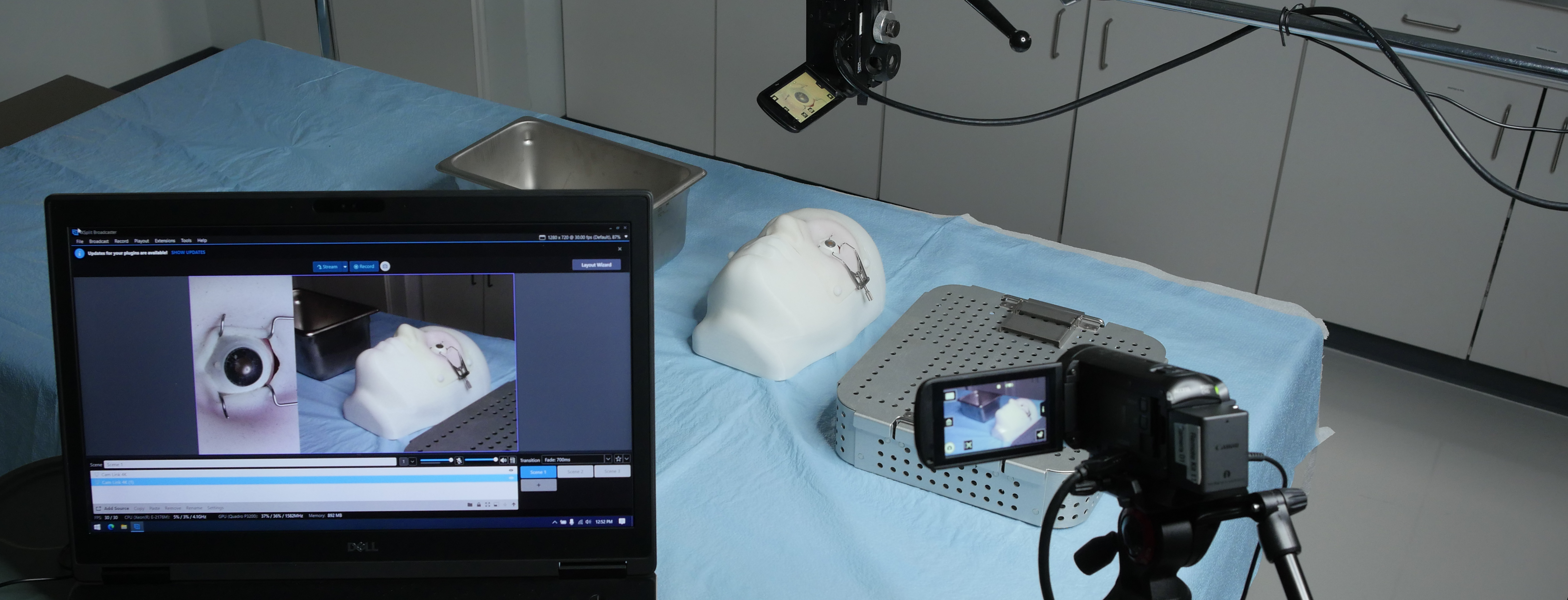
Once prototypes are developed, formative evaluation is conducted to preliminarily assess the use-related risk mitigations as well as the degree to which the product is effective and easy to use. This is an iterative process, where feedback may be used to update user needs, user requirements, and the use-related risk analysis. This stage will often result in updates to the product user interface and labeling, as well as a determination whether and to what degree user training will be required.

There are two broad categories of formative evaluation, based on the degree to which representative users and use environment is involved. Read about Heuristic vs. Usability Studies here.

  • Heuristic or Expert Reviews: “Quick and dirty” evaluations involving the assessment of a design by usability experts based on established Human Factors heuristics (rules of thumb).
  • Formative Usability Testing: Usability testing with representative users by simulating product use in realistic scenarios. Formative testing can be performed either with a subset of tasks or the entire system, and with everything from early-stage prototypes to near validation-ready products. Read about Formative Studies here.

Summative Usability Validation

Once formative evaluations have demonstrated that the use-related risk mitigations are adequate and the product is sufficiently usable, usability validation testing (also referred to as summative evaluation) can be conducted.

The usability validation process involves formally validating that the intended users can safely and effectively use the product to perform all critical tasks, that all identified risks are adequately mitigated, and that the product performs as expected under (usually simulated) real-world conditions. Testing should simulate actual use conditions as closely as possible, with a sufficient sample size of representative users of all intended user groups.

For example, when Tandem Diabetes Care developed the world’s smallest insulin pump—Tandem Mobi—they partnered with Kaleidoscope to support formative and summative studies for FDA submission (learn more here).

Once usability validation is complete, a comprehensive Human Factors report is created as part of the regulatory submission for product approval.

Conclusion

The Human Factors engineering process for a medical product is complex and requires the expertise of experienced professionals to fully realize the potential of the product concept. But the result of a properly scoped and applied Human Factors process is a product that is safe, effective, and easy to use, making it more likely to result in a successful regulatory submission and ultimate success in the market.

For over 7 years, Kaleidoscope Innovation has been a trusted partner in Human Factors engineering, supporting industry leaders like Eli Lilly, Pfizer, and Baxter. Whether you're bringing a new device to market or refining an existing product, our team brings deep expertise and real-world insight to every stage of development. Let’s talk about how we can help you design safer, smarter, and more user-friendly medical products.

Back to Insights + News

Author

Breaking Down the FDA's New URRA Guidance: July 2024 

The FDA has recently released a draft guidance on Use-Related Risk Analyses (URRAs) for drugs, biological products, and combination products. This new guidance consolidates previously available information into one comprehensive document, making it easier for industry stakeholders to access and apply the guidelines effectively.

KEY HIGHLIGHTS OF THE GUIDANCE:

  1. Purpose: The guidance aims to explain identifying use-related hazards and implement measures to reduce associated risks. This is crucial for ensuring that medical products are safe and effective for their intended users.
  2. Scope: The guidance is applicable to drugs, biological products, and combination products. This broad scope ensures that a wide range of products are covered, promoting consistency in risk management practices across different types of medical products.
  3. Process: URRAs should be initiated early in product development and updated throughout the product lifecycle. This proactive approach helps in identifying potential risks early and allows for timely mitigation strategies.
  4. Consolidation: This guidance combines previously available information into one comprehensive document, streamlining the process for stakeholders. This consolidation helps in reducing confusion and ensures that all relevant information is easily accessible.

WHY THIS MATTERS:

The new guidance ensures the safety and effectiveness of medical products by helping to determine the need for Human Factors (HF) study results in new marketing applications. By identifying and mitigating use-related risks early in the product development process, companies can enhance the overall safety and usability of their products. This not only protects end-users but also helps companies avoid costly recalls and redesigns.

KALEIDOSCOPE'S EXPERTISE:

At Kaleidoscope Innovation, we specialize in Human Factors for medical products, and have already integrated FDA guidance's into our process. Our team of experts interprets the guidance and applies it directly to your FDA submissions, ensuring you meet the latest requirements. Our HF team works closely with our regulatory team to help you understand the complexities of the regulatory landscape and provide tailored solutions to meet your specific needs.

HOW WE CAN HELP:

  • Interpretation: Our experts can help you understand the nuances of the new guidance. We provide detailed explanations and practical insights to ensure you fully grasp the requirements.
  • Application: We assist in applying the guidance to your product development and FDA submissions. Our team can help you develop comprehensive Use-Related Risk Analyses (URRAs) that meet FDA standards.
  • Compliance: Ensure your products meet the latest FDA requirements with our comprehensive consulting services. We offer ongoing support to help you stay compliant throughout the product lifecycle.
Back to Insights + News

Author

  • Taylor Morgan

    Human Factors Engineer | [email protected]

    Taylor is a Human Factors Engineer at Kaleidoscope Innovation. She brings experience from roles in Human Factors, Research and Design, and Clinical Research. Her background in Human Factors Engineering, combined with her collaborative approach, ensures that user-centered design is seamlessly integrated into every project.