

Usability Check: The Bandage Battle You Didn’t Know You Needed

Everyone has used an adhesive bandage, but which one is your favorite? Have you ever stopped to think about why? Bandage usability has real implications for patient care, safety, and user satisfaction. In this article, we examine how packaging, adhesive, and design choices impact the experience for end users.

Although adhesive bandages are typically classified as Class I medical devices by the Food and Drug Administration (FDA), that doesn't mean usability is unimportant. Think about the last time you used one: Were you in pain? In a rush? Maybe trying to open and apply it with one hand? These are the kinds of real-world conditions that highlight the importance of thoughtful design. To demonstrate that human factors can be applied to even the simplest of devices, we evaluated the usability of four different bandages that can be found in any local drugstore.


The Bandages

We chose four different adhesive bandages to compare. These bandages were chosen for their brand recognition and variability in shape, size, and material type.

  1. Band-Aid - Flexible Fabric Knuckle & Fingertip Bandages, H-shape
  2. Niceful - Silicone Foam Dressing Gentle Border, square shape
  3. Nexcare - Waterproof Clear Bandages, hexagon shape
  4. Welly - Adhesive Flexible Fabric Bravery Badges, oval shape

Each bandage was evaluated based on key features and usability considerations, including the texture and flexibility of the fabric, the ease of removing the liner and applying the bandage, and the clarity of the instructions, labeling, and overall packaging design.


Methods and Results

In June 2025, 2 Human Factors Engineers (HFEs) from Kaleidoscope Innovation, Rebecca Chompff and Taylor Morgan, performed a systematic evaluation of 4 bandages and 10 key bandage features essential for successful and satisfactory use.

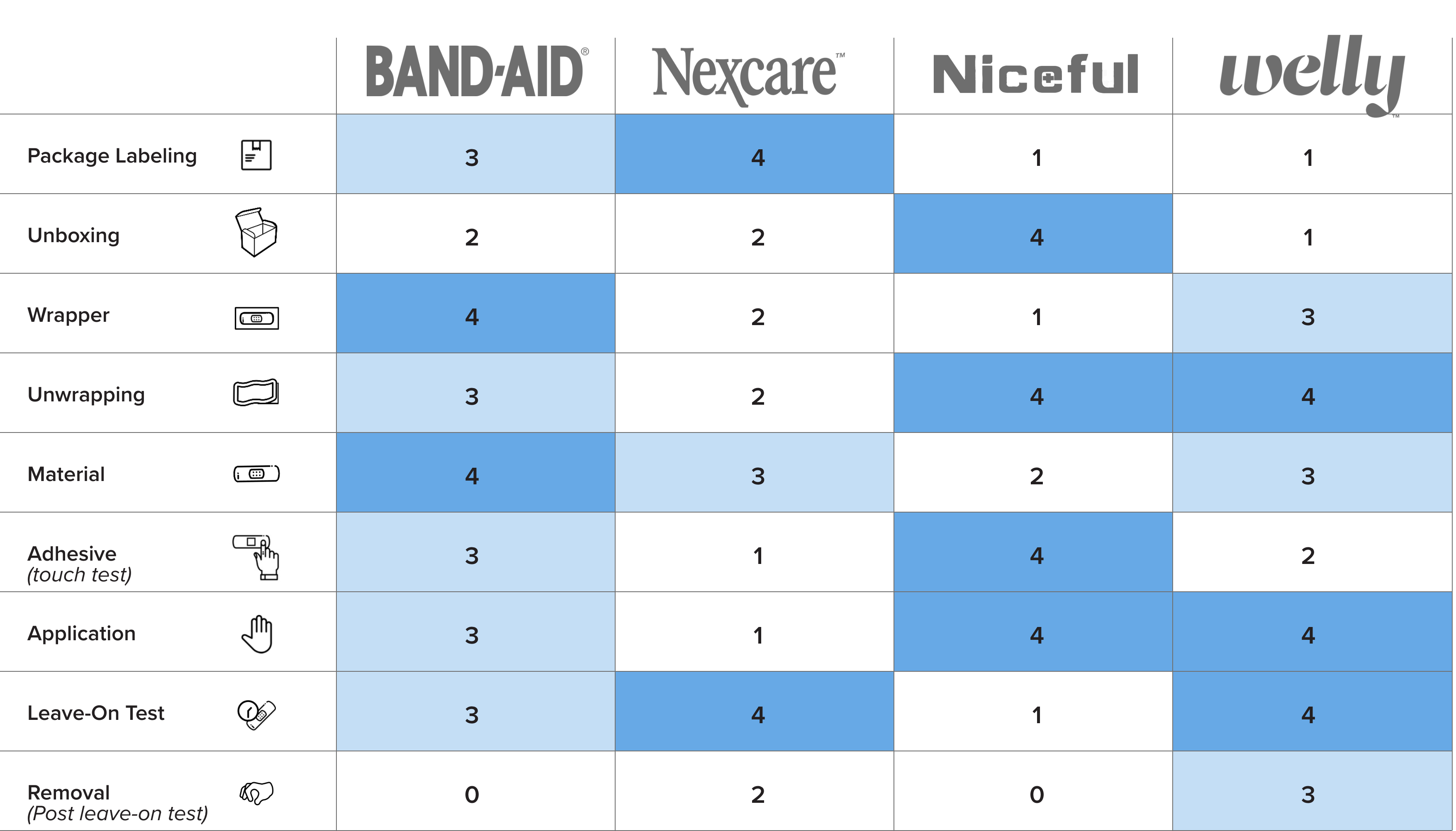
The usability of each bandage was discussed on a feature-by-feature basis. Each feature was subjectively rated on a scale from 0 to 4, where 0 = Not Applicable, 1 = Poor, 2 = Okay, 3 = Good, and 4 = Great.

The 10 key bandage features that were assessed included:

  • package labeling,
  • unboxing,
  • wrapper,
  • unwrapping,
  • material,
  • adhesive,
  • application,
  • a 72-hour leave-on test,
  • and removal post leave-on test.

The table below displays the subjective ratings for each bandage and bandage feature assessed during this evaluation:

The adhesive bandage(s) rated the highest and lowest for each key feature are discussed below:

  • Package Labeling refers to all text and visuals displayed on the bandage container and was evaluated for its usability. Nexcare earned the highest score (4) for its clear and informative labeling, featuring concise text, large graphics, well-organized layout, and user-friendly “Easy to Apply” instructions printed on the side of the box. In contrast, Niceful and Welly received the lowest score (1). Niceful was marked down for its lengthy paragraphs and the use of medical terminology, such as “absorb exudate quickly,” which could be important for healthcare professionals but may confuse lay users. Welly scored poorly due to minimal information and prioritization of kid-friendly colors over clarity. Most of the information was printed on a disposable paper wrapper around the tin container, which has to be removed, and likely discarded, before use.

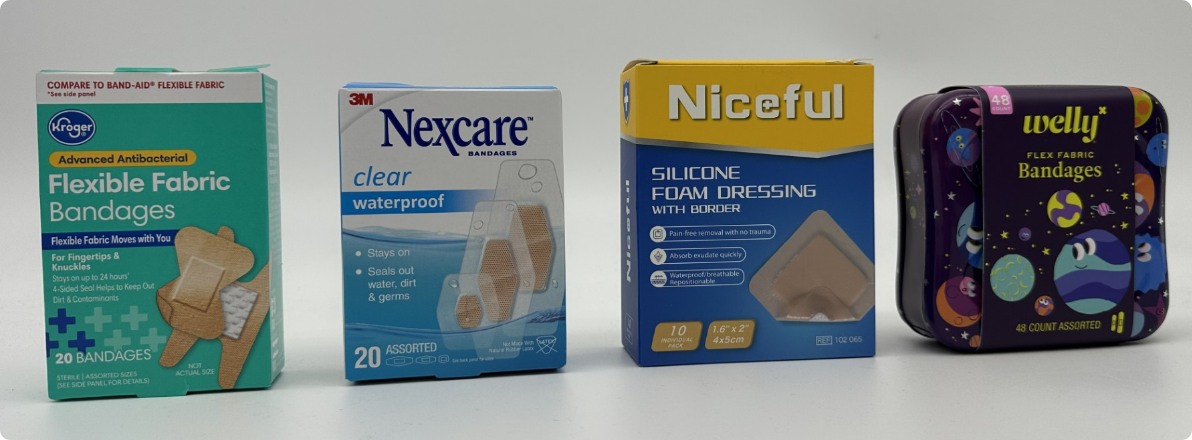
Figure 1. Bandage Packages – Left to right: Band-Aid, Nexcare, Niceful, Welly

  • 4Unboxing refers to the process of opening the new container to access the bandages inside. Niceful received the highest score (4) for its adhesive safety seal, which includes a pull tab sticker that aids the user in opening the box. Welly earned the lowest score (1) due to the absence of clear instructions or indicators on how to open the tin or identify its top side. Opening the Welly lid also required significant force, causing some bandages to fall out.
  • Wrapper refers to the sealed paper or plastic covering of each individual bandage. Band-Aid received the highest score (4) for its paper wrapper, which features a “peel here” label printed on a prominent red bar next to the pull tabs. In contrast, Niceful received the lowest score (1) due to its oversized plastic wrapper, which creates unnecessary waste and lacks clearly identifiable pull tabs.

Figure 2. Wrapped Bandages – Left to right: Band-Aid, Nexcare, Niceful, Welly
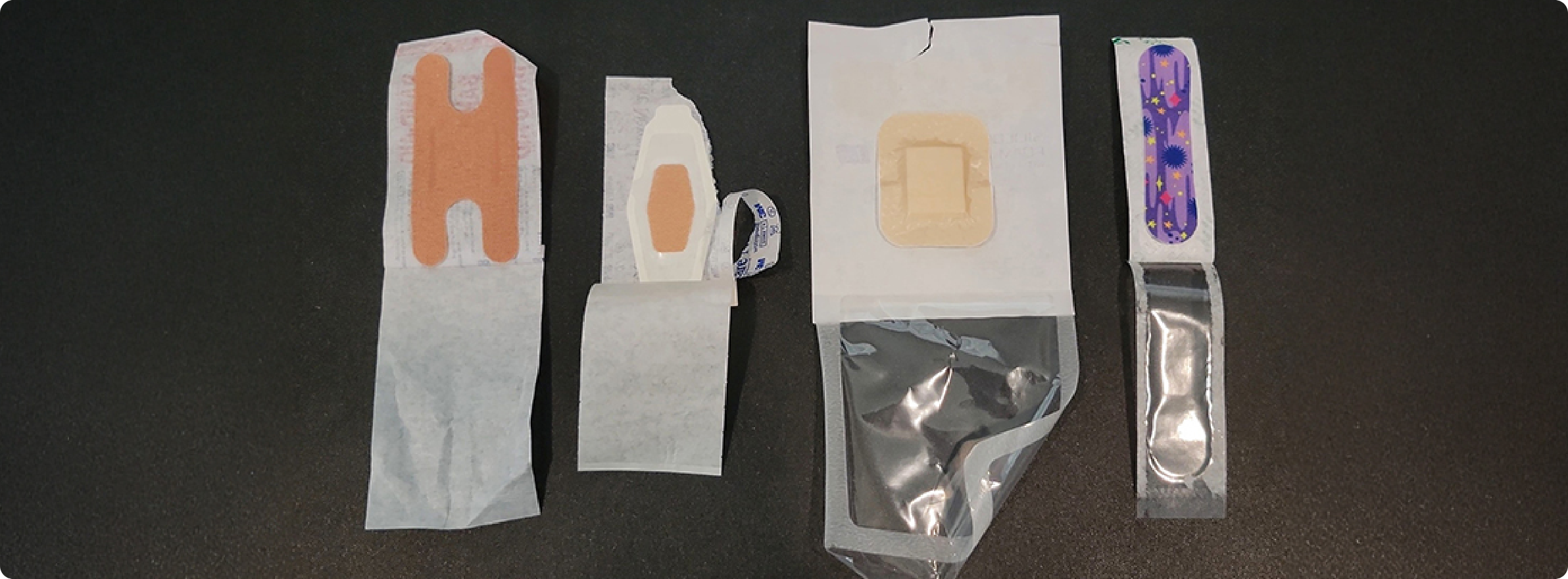
  • Unwrapping refers to the process of opening the sealed paper or plastic covering each bandage. Niceful and Welly received the highest score (4) for their user-friendly design, featuring large peel tabs and wrappers that separated easily. Nexcare received the lowest score (2) because its wrapper was somewhat difficult to pull apart and often tore irregularly during opening. No bandage received a score of 1 in this category.

Figure 3. Unwrapped Bandages – Left to right: Band-Aid, Nexcare, Niceful, Welly
  • Material refers to the surface of the bandage opposite the adhesive liner. Band-Aid earned the highest score (4) for its smooth, soft, and comfortable texture, along with the ability to stretch and conform to the body. Niceful received the lowest score (2) due to its slick plastic texture, which felt soft but less pleasant to the touch. No bandage received a score of 1 in this category.
  • Adhesive refers to the sticky side of the bandage that adheres to the skin and was assessed by fingertip touch. Niceful received the highest score (4) for its sticky adhesive, which continued across the absorbent pad, indicating that the bandage would stay securely in place for the duration of wear. Nexcare received the lowest score (1) due to its lack of stickiness, which raised concerns about its ability to remain adhered to the skin.
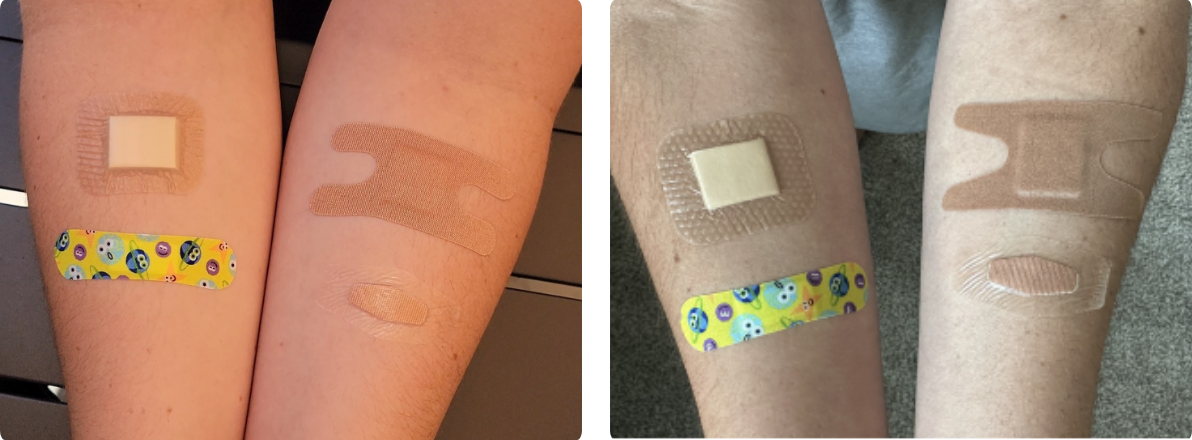
  • Application refers to the process of placing a bandage onto the skin—in our case, along the forearm. Niceful and Welly received the highest scores (4) for smooth application and visible adherence to both hairy and non-hairy skin. Nexcare received the lowest score (1) because proper application required careful attention to the performance of the application steps, particularly involving peeling individual border pieces from the bandage. The Nexcare bandage also requires more pressure to seal properly and showed poor adhesion on hairy skin.

Figure 4 +5. All bandages immediately following application
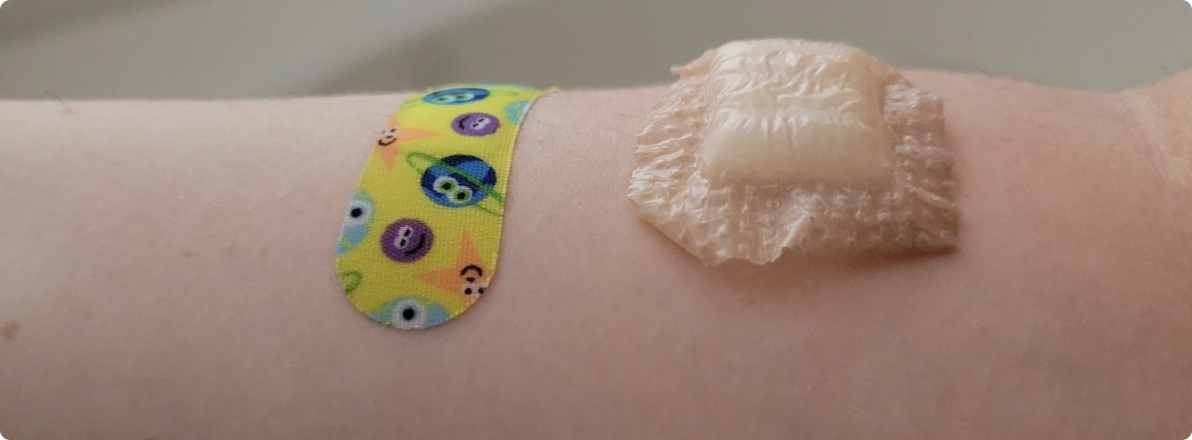
  • Leave-On Test refers to a trial involving two researchers wearing each of the four bandages continuously on their forearms for 72 hours. During this period, both researchers took three showers, completed two workouts, and were exposed to average outdoor temperatures of 85°F. Nexcare and Welly received the highest score (4) for maintaining strong adhesion throughout the full 72 hours. Niceful received the lowest score (1) as it detached after just 6 hours for one researcher and 19 hours for the other—both shortly after their first shower. For one of the researchers, Band-Aid detached after their second shower, approximately 30 hours after application.

Figure 6. Niceful bandage (right), 19 hours after application and moments before it detached

  • Removal (post leave-on test) refers to the process of taking off the bandage after the 72-hour wear period described above. Notably, no bandage received a perfect score of 4 in this category. Welly received the highest score (3) for this removal, as it caused only minimal discomfort. Band-Aid received the lowest score (0) because one researcher experienced the bandage detaching after just 30 hours so it could not be fairly compared to the other bandages that adhered for the full 72-hours. Niceful also received the lowest score (0), as both researchers reported the bandage falling off prematurely—after 6 and 19 hours, respectively.


Final Thoughts

This evaluation has made clear that even though these bandages initially seem very similar, they each have specific strengths and weaknesses. The Band-Aid bandage wrapper has easily identifiable instructions for opening, and the bandage material feels comfortable and smooth on the skin. The Nexcare bandage packaging has the most user-friendly labeling and maintained a strong adherence to the skin for the entire 72-hour leave-on test. The Niceful bandage package was easy to open and unwrap, felt stickiest during the adhesive touch test, could be applied with minimal difficulty, and did not hurt during immediate removal. The Welly bandage was easy to unwrap, could be applied with minimal difficulty, and maintained a strong adherence to the skin for the entire 72-hour leave-on test.

With these considerations in mind, here are our final bandage recommendations:

  • Best for kids: Welly
  • Pain free removal: Niceful
  • Best longevity: Nexcare or Welly
  • Best comfort: Band-Aid or Welly
  • Most waterproof: Nexcare
  • Overall favorite: Welly! The endearing designs, comfort, and longevity of wear made the Welly bandage our overall favorite.

Next time you’re at the store picking out adhesive bandages, remember these considerations to help you choose the best one for your needs.

Back to Insights + News

Authors

  • Rebecca Chompff

    Senior Human Factors Engineer | [email protected]

    Rebecca Chompff is a Senior Human Factors Engineer at Kaleidoscope Innovation. With a background in Psychology and Human Factors Engineering, she is dedicated to translating real-world user insights into actionable design improvements that enhance both usability and user satisfaction. Driven by empathy and evidence, Rebecca ensures every design decision reflects the needs and experiences of the people who actually use it.

  • Taylor Morgan

    Human Factors Engineer | [email protected]

    Taylor is a Human Factors Engineer at Kaleidoscope Innovation. She brings experience from roles in Human Factors, Research and Design, and Clinical Research. Her background in Human Factors Engineering, combined with her collaborative approach, ensures that user-centered design is seamlessly integrated into every project.

Formative Human Factors Studies Elevate the Design Process and Ultimately Drive Market Success

A formative human factors study plays a pivotal role in the design process, particularly in industries where usability directly impacts safety, efficiency, and regulatory compliance. This research method, typically conducted during the early to mid-stages of the design process, provides actionable insights to align the product with real-world user needs and workflows. Beyond improving usability, formative studies deliver significant business value by reducing costly redesigns and enhancing a product's competitive edge.

When to Conduct a Formative Human Factors Study

Formative studies are most effective during the early stages of the design process, when prototypes or workflows remain flexible. By iterating on the design based on user feedback, teams can identify and resolve usability issues before they escalate into expensive fixes later in development. Repeating formative studies at key points throughout the design process ensures that the product evolves in step with user expectations and emerging requirements.

Why Conduct a Formative Study?

The primary goal of formative studies is to proactively identify potential user challenges, especially those that could lead to errors, frustration, or inefficiency. In high-stakes industries like healthcare, addressing these challenges early helps mitigate risks, enhance safety, and ensure compliance with standards such as the FDA’s human factors guidance for medical devices.

From a business perspective, formative studies create products that resonate more effectively with users, driving customer satisfaction and market adoption. They also streamline regulatory approval by ensuring the product design adheres to usability and safety standards, reducing delays and associated costs.

Ethnographic Methods in Formative Studies

Ethnographic research is a cornerstone of formative human factors studies, offering deep insights into how users interact with products in real-world settings. Methods such as observational studies, contextual inquiries, and think-aloud protocols help uncover hidden pain points and inefficiencies that might not emerge in controlled environments. For example, observing medical professionals using a device in a clinical setting can reveal critical workflow issues that may be overlooked in a simulated lab.

These methods allow designers and engineers to empathize with users, enabling them to create products that better accommodate user environments, limitations, and preferences. This user-centered approach enhances product usability and builds a reputation for intuitive, high-quality solutions—key drivers of customer loyalty.

FDA Guidance and Compliance

In regulated industries, following FDA human factors guidelines is essential. The FDA emphasizes that human factors studies, including formative testing, must demonstrate that users can safely and effectively operate the product under real-world conditions. Formative studies aligned with these guidelines provide evidence of due diligence and risk mitigation, paving the way for smoother regulatory submissions.

The Business Value of Formative Studies

Beyond usability and safety improvements, formative studies deliver significant business benefits. By identifying usability issues early in the design process, these studies help minimize development costs and prevent expensive late-stage redesigns. Products created with a strong focus on user needs are more likely to succeed in the marketplace, driving customer satisfaction and loyalty. Additionally, addressing regulatory requirements early reduces the risk of delays or setbacks in bringing products to market.

Conclusion

Formative human factors studies are more than a tool for improving usability—they are a strategic investment in product success. By integrating ethnographic methods and adhering to FDA guidelines, these studies enhance safety, usability, and user satisfaction while providing measurable business advantages. Incorporating formative studies at the right points in the design process enables companies to create products that are safer, more effective, and better aligned with user needs, all while optimizing costs and time to market.

For over 7 years, Kaleidoscope Innovation has been a trusted partner for industry leaders like Eli Lilly, Pfizer, and Baxter to bring safer, smarter medical products to life. Our integrated Human Factors expertise ensures that usability is built in, helping you reduce risk, accelerate development, and deliver intuitive, high-performing solutions. Whether you're launching a new product or refining an existing one, we’re here to support every step of the process. Let’s talk about how we can help elevate your design through formative research.

Back to Insights + News

Author

Human Factors Engineering Process for Medical Devices

In the medical product industry, ensuring the safety, efficacy, and usability of products is paramount. One of the key methods for achieving this goal is through the proper implementation of a robust Human Factors engineering (also known as usability engineering or ergonomics) process. Human Factors engineering (HFE) focuses on optimizing the interaction between people and technology to prevent errors, enhance performance, and improve the overall user experience.

Because of the risks involved, medical device development demands an especially thorough Human Factors process. They often require precise operation under conditions where an error can result in reduced clinical effectiveness, harm, or even death. Whether these products are used by health care providers, caregivers, or even the patients themselves, medical products that are not designed with the capabilities of the end user in mind can increase the chance of errors. To mitigate these risks, regulatory bodies such as the U.S. Food and Drug Administration (FDA) mandate that Human Factors principles be integrated into the design and development of medical products.

The HFE process for medical products is a structured, iterative approach that aims to identify potential use-related risks early in the design process and systematically reduce those risks throughout product development. This process incorporates both user needs and environmental considerations to create intuitive, safe, and effective products.

Human Factors process

User Research and Task Analysis

The first step in the HFE process is to develop a deep understanding of the intended users and the tasks they will perform with the product. It is important to recognize that there may be distinct types of users (user groups) that have varying tasks, capabilities, and responsibilities. This step involves the following activities:

  • User needs: Identify the specific requirements and expectations of users that the product needs to fulfill to be used safely and effectively. These needs generate testable design requirements.
  • User characteristics: Understand the characteristics of the intended users that could impact product use. Common characteristics include age range, experience, education, physical abilities, cognitive capabilities, and any disabilities. These characteristics may drive segmentation of the intended users into separate user groups for usability testing.
  • Use environment: Identify factors such as lighting, noise, and other products in the intended use environment that may impact use of the product, keeping in mind there may be multiple environments in which the product is used, such as a clinic or a home setting.
  • Task Analysis: Based on the intended use of the product, identify and break down the tasks that users must accomplish to safely and effectively use the product. Read about Task Analysis here.

Identifying and Analyzing Risks

Once the user characteristics, environments, and tasks are understood, the next step is to conduct a use-related risk analysis (URRA). This process involves:

  • identification of what and how use errors may occur
  • assessment of the potential consequences and severity of those errors
  • identification of potential mitigations
  • validation plans for those mitigations

By systematically analyzing use-related risks, the design team can prioritize which potential issues are most critical to address based on severity, likelihood, and impact on patient safety. Additionally, this is the step in which critical tasks are identified. According to the FDA guidance document “Applying Human Factors and Usability Engineering to Medical Devices,” critical tasks are those which, if performed incorrectly or not performed at all, would or could cause serious harm to the patient or user, where harm is defined to include compromised medical care. Identification of critical tasks drives creation of the usability validation protocol, to ensure that any critical use error mitigations are properly validated.

The URRA can be considered a “living document,” since it should be continuously updated throughout the product development process when new hazards are identified through usability testing and existing hazards are mitigated through design.

Human Factors processDesign and Prototyping

Human Factors specialists collaborate closely with designers and engineers—and and at Kaleidoscope, that means working under the same roof—to create prototypes that align with user needs and risk mitigation strategies. This integrated approach streamlines communication, accelerates iteration, and results in more effective, user-centered designs. Multiple prototypes may be developed that can be evaluated with representative users in the next phase.

Human Factors processFormative Usability Testing and Evaluation

Once prototypes are developed, formative evaluation is conducted to preliminarily assess the use-related risk mitigations as well as the degree to which the product is effective and easy to use. This is an iterative process, where feedback may be used to update user needs, user requirements, and the use-related risk analysis. This stage will often result in updates to the product user interface and labeling, as well as a determination whether and to what degree user training will be required.

There are two broad categories of formative evaluation, based on the degree to which representative users and use environment is involved. Read about Heuristic vs. Usability Studies here.

  • Heuristic or Expert Reviews: “Quick and dirty” evaluations involving the assessment of a design by usability experts based on established Human Factors heuristics (rules of thumb).
  • Formative Usability Testing: Usability testing with representative users by simulating product use in realistic scenarios. Formative testing can be performed either with a subset of tasks or the entire system, and with everything from early-stage prototypes to near validation-ready products. Read about Formative Studies here.

Summative Usability Validation

Once formative evaluations have demonstrated that the use-related risk mitigations are adequate and the product is sufficiently usable, usability validation testing (also referred to as summative evaluation) can be conducted.

The usability validation process involves formally validating that the intended users can safely and effectively use the product to perform all critical tasks, that all identified risks are adequately mitigated, and that the product performs as expected under (usually simulated) real-world conditions. Testing should simulate actual use conditions as closely as possible, with a sufficient sample size of representative users of all intended user groups.

For example, when Tandem Diabetes Care developed the world’s smallest insulin pump—Tandem Mobi—they partnered with Kaleidoscope to support formative and summative studies for FDA submission (learn more here).

Once usability validation is complete, a comprehensive Human Factors report is created as part of the regulatory submission for product approval.

Conclusion

The Human Factors engineering process for a medical product is complex and requires the expertise of experienced professionals to fully realize the potential of the product concept. But the result of a properly scoped and applied Human Factors process is a product that is safe, effective, and easy to use, making it more likely to result in a successful regulatory submission and ultimate success in the market.

For over 7 years, Kaleidoscope Innovation has been a trusted partner in Human Factors engineering, supporting industry leaders like Eli Lilly, Pfizer, and Baxter. Whether you're bringing a new device to market or refining an existing product, our team brings deep expertise and real-world insight to every stage of development. Let’s talk about how we can help you design safer, smarter, and more user-friendly medical products.

Back to Insights + News

Author